Table of Contents
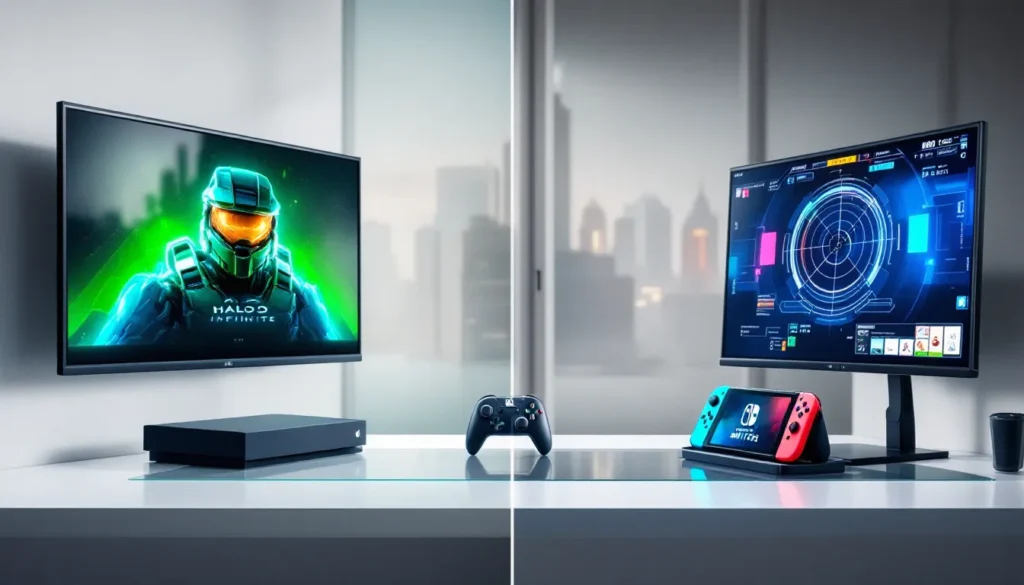
ToggleIf you’re wondering whether you can blast Covenant forces on your Nintendo Switch, you’re not alone. Halo remains one of gaming’s most iconic franchises, and the Switch’s portability makes it an attractive platform for FPS fans. The question of Halo’s availability on Nintendo hardware has circulated for years, especially as Microsoft has loosened its grip on certain exclusives. But the reality isn’t as straightforward as many players hope. This guide breaks down everything you need to know about Halo and the Switch in 2026, from why the franchise hasn’t made the jump, to workarounds that might get you playing, to the best FPS alternatives already available on Nintendo’s hybrid console.
Key Takeaways
- Halo is not available on Nintendo Switch and has no official ports, cloud streaming options, or announced plans from Microsoft or 343 Industries to bring the franchise to Nintendo’s platform.
- Microsoft maintains Halo as a flagship exclusive to drive Xbox hardware sales and Game Pass subscriptions, prioritizing ecosystem engagement over cross-platform availability.
- While Microsoft has released selective titles like Minecraft and Ori on Switch, smaller franchises get ported while tentpole exclusives like Halo remain locked to Xbox and PC.
- Switch owners can access Halo through Xbox Cloud Gaming by streaming to mobile devices or tablets with Game Pass Ultimate, or by playing on PC or Xbox consoles.
- The best Nintendo Switch FPS alternatives include Doom Eternal for fast-paced action, Metroid Prime Remastered for exploration-focused gameplay, and Splatoon 3 for competitive multiplayer depth.
The Short Answer: Halo’s Availability on Nintendo Switch
No, you cannot play Halo on Nintendo Switch. As of March 2026, no mainline Halo game, including Halo Infinite, Halo: The Master Chief Collection, or any legacy title, is available on Nintendo’s platform.
There are no official ports, no cloud streaming options through Nintendo’s eShop, and no announced plans from Microsoft or 343 Industries to bring the franchise to Switch. Unlike some former Xbox exclusives that have found their way to other platforms, Halo remains firmly tied to the Xbox ecosystem and PC.
This isn’t likely to change in the immediate future. Microsoft has maintained Halo as a flagship exclusive for over two decades, and the franchise continues to serve as a major selling point for Xbox consoles and Game Pass subscriptions. While the gaming industry has seen surprising moves toward cross-platform availability, Halo hasn’t followed that trend, at least not yet.
Why Halo Isn’t Available on Nintendo Switch
Microsoft’s Exclusive Publishing Rights
Microsoft owns 343 Industries outright, the studio responsible for developing Halo since 2012. Before that, Bungie created the franchise while under Microsoft’s umbrella. This means every Halo game, from Halo: Combat Evolved to Halo Infinite, is a first-party Microsoft title.
First-party exclusives exist to drive hardware sales and ecosystem engagement. For Microsoft, Halo has always been the poster child for Xbox. It’s the franchise that sold the original Xbox in 2001, defined the Xbox 360 era, and continues to anchor Game Pass subscriptions. Releasing Halo on a competitor’s hardware would undermine that strategic value.
Unlike third-party games where publishers weigh platform exclusivity against broader market reach, Microsoft doesn’t need to make that calculation. Halo’s job is to sell Xboxes and Game Pass memberships, not to maximize unit sales across all platforms.
The Xbox-Halo Partnership History
Halo and Xbox are inseparable. Halo: Combat Evolved launched alongside the original Xbox in November 2001, and it’s no exaggeration to say the console might have failed without it. The game redefined console shooters with its dual-stick controls, vehicular combat, and theater-mode replays.
Halo 2 became Xbox Live’s killer app in 2004, cementing online multiplayer as a console standard. Halo 3 broke entertainment records in 2007, grossing $170 million in its first 24 hours. The franchise has moved over 81 million units across all titles as of 2021.
This legacy makes Halo more than just another exclusive, it’s a cultural touchstone for the Xbox brand. Microsoft has treated it accordingly, keeping it locked to Xbox and PC even as other major franchises have gone multi-platform. That’s unlikely to shift without a fundamental change in Microsoft’s platform strategy.
Recent Microsoft and Nintendo Collaborations
Games That Have Made the Jump
Microsoft hasn’t been entirely opposed to putting its games on Nintendo hardware. Several titles have crossed over in recent years:
- Minecraft continues to thrive on Switch, with cross-play support and regular updates matching other platforms.
- Ori and the Blind Forest and Ori and the Will of the Wisps both received Switch ports, even though being published by Xbox Game Studios.
- Cuphead arrived on Switch in April 2019, complete with local co-op.
- Banjo-Kazooie appears in Super Smash Bros. Ultimate as a playable fighter, a rare instance of Microsoft IP on Nintendo’s platform.
These releases suggest Microsoft is willing to share certain properties when it makes business sense. The common thread? Most are single-player or co-op experiences that don’t directly compete with Xbox’s online ecosystem. They’re also not flagship franchises like Halo or Gears of War.
What This Means for Future Halo Releases
The collaborations listed above might seem encouraging, but they don’t necessarily pave the way for Halo. According to industry coverage from Windows Central, Microsoft’s approach has been selective, smaller titles and legacy IP get ported, but tentpole franchises remain exclusive.
There’s a strategic difference between porting Ori, a beloved but niche platformer, and bringing Halo Infinite to Switch. The latter would signal a massive shift in Microsoft’s platform priorities. Phil Spencer, head of Xbox, has emphasized that exclusives still matter for building platform identity, even as Microsoft expands Game Pass to PC and cloud.
So while the door isn’t permanently sealed, it’s heavily guarded. Unless Microsoft pivots to a full third-party publishing model, something they’ve shown zero interest in, Halo on Switch remains a long shot.
Alternative Ways to Play Halo Games
Xbox Consoles and Game Pass
The most straightforward way to play Halo is on an **Xbox Series X
|
S** or Xbox One. Every mainline Halo game is available through Game Pass, Microsoft’s subscription service. For $16.99/month (Game Pass Ultimate), you get access to the entire catalog, including:
- Halo: The Master Chief Collection (contains Halo: CE, 2, 3, 4, and ODST)
- Halo 5: Guardians
- Halo Infinite (campaign and multiplayer)
Game Pass Ultimate also includes cloud gaming, which we’ll cover next. If you’re committed to experiencing Halo as intended, with full multiplayer support, 120fps options on Series X, and consistent updates, this is the route.
Cloud Gaming on Switch via Workarounds
Here’s where things get creative. Xbox Cloud Gaming (formerly xCloud) streams Game Pass titles to mobile devices, tablets, and PCs. Officially, it doesn’t support Switch hardware. But some players have reported limited success using Android-based workarounds on modded Switch units.
This isn’t recommended. It requires homebrew software, voids your warranty, and risks a ban from Nintendo’s online services. Performance is also inconsistent, latency, resolution drops, and control mapping issues make competitive multiplayer nearly unplayable.
A better workaround: stream to a phone or tablet and use a Bluetooth controller. It’s not portable in the same way Switch is, but it’s legal, stable, and doesn’t risk your hardware. Microsoft’s cloud streaming works well on devices with 5GHz Wi-Fi and Game Pass Ultimate subscriptions.
PC Gaming Options
All modern Halo games are available on Windows 10 and 11 through the Xbox app and Steam. If you’ve got a gaming PC or laptop, this is arguably the best way to play. Benefits include:
- Mouse and keyboard support for precision aiming
- Uncapped frame rates (depending on your hardware)
- Mod support for titles like Halo: CE and Halo 2
- Cross-play with Xbox in Halo Infinite multiplayer
Halo: The Master Chief Collection frequently goes on sale on Steam for under $20, and it’s also part of PC Game Pass ($11.99/month). If you’re serious about Halo and already own a capable PC, this is the most versatile option.
Best Nintendo Switch FPS Games Similar to Halo
Doom and Doom Eternal
If you’re craving fast-paced FPS action on Switch, Doom (2016) and Doom Eternal are the closest you’ll get to Halo’s intensity. Both run surprisingly well on Nintendo’s hardware, thanks to Panic Button’s porting expertise.
Doom Eternal delivers:
- 30fps gameplay in both docked and handheld modes
- Tight gunplay with weapon switching and glory kills
- Arena-style combat that rewards movement and aggression
- A killer metal soundtrack
It’s not Halo, but it scratches a similar itch. The campaign is single-player only, so don’t expect multiplayer modes. Still, if you want that top Nintendo Switch FPS experience, this is it.
Metroid Prime Remastered
Released in February 2023, Metroid Prime Remastered brings the GameCube classic to Switch with overhauled visuals and modern controls. It’s not a traditional run-and-gun shooter, it leans heavily into exploration and environmental puzzles, but the first-person perspective and sci-fi setting evoke similar vibes to Halo’s quieter moments.
Key features:
- 60fps in both docked and handheld modes
- Gyro aiming for precision
- Atmospheric alien worlds to explore
- Iconic boss fights
If you loved Halo’s sense of discovery on the ring worlds, Metroid Prime’s Tallon IV offers a slower-paced but equally rewarding experience.
Overwatch 2
Overwatch 2 launched on Switch in October 2022 as a free-to-play hero shooter. It’s not a direct Halo analog, but it fills the competitive multiplayer niche with objective-based modes, team coordination, and diverse character kits.
Expect:
- 30fps performance with occasional dips in hectic moments
- Cross-play with PS5, Xbox, and PC (though Switch players are often at a disadvantage)
- Seasonal updates and battle passes
- Quick matches that fit handheld play sessions
Controls feel serviceable with gyro assist enabled. Competitive players will prefer other platforms, but for casual Arena or Quick Play matches, it’s solid.
Warframe
Another free-to-play option, Warframe offers sci-fi gunplay, co-op missions, and deep progression systems. It’s more looter-shooter than Halo, but the space ninjas aesthetic and fast movement can hook FPS fans looking for something different.
Warframe on Switch includes:
- Cross-save with PC and other consoles
- Regular content updates (though sometimes delayed compared to PC)
- Gyro aiming support
- Docked performance around 30fps
It’s grindy and complex, so expect a learning curve. But if you’re willing to invest the time, it’s one of the most content-rich shooters available on Switch.
Splatoon 3
Hear me out: Splatoon 3 is nothing like Halo thematically, but it’s the best competitive multiplayer shooter on Switch. The ink-based turf war mechanics, tight map design, and ranked modes create a skill ceiling that rivals traditional FPS games.
Why it’s worth considering:
- 60fps in multiplayer modes
- Gyro aiming that feels better than most Switch shooters
- Active online community and regular Splatfests
- Single-player campaign with creative level design
It’s colorful, quirky, and very Nintendo, but the underlying shooter mechanics are rock-solid. If you’ve exhausted other options and want something fresh, don’t sleep on it.
Could Halo Ever Come to Nintendo Switch?
Industry Trends Toward Cross-Platform Gaming
The gaming industry has trended toward breaking down platform barriers. Sony brought God of War, Horizon Zero Dawn, and The Last of Us to PC. Microsoft shipped Sea of Thieves to PlayStation 5 in 2024. Even Nintendo has dabbled in mobile releases and cloud partnerships.
But context matters. Sony’s PC ports arrived years after console exclusivity windows, targeting a separate revenue stream without cannibalizing PlayStation sales. Microsoft’s multi-platform experiments have focused on live-service games that benefit from larger player pools, not flagship single-player experiences.
According to discussions on Nintendo Life, the likelihood of Halo making the jump depends less on industry trends and more on Microsoft’s long-term hardware strategy. If Xbox pivots further toward a platform-agnostic model, focusing on Game Pass and cloud rather than console sales, Halo could theoretically follow. But that’s a big “if.”
Technical Feasibility and Hardware Limitations
Could the Switch even run Halo? The answer is yes, but with compromises. The Switch’s Nvidia Tegra X1 chipset is closer to Xbox 360-era hardware than Xbox One, but capable ports of demanding games like The Witcher 3, Doom Eternal, and Wolfenstein II prove it’s not impossible.
Halo: The Master Chief Collection would be the easiest fit, those are Xbox 360 and Xbox One titles originally. Dynamic resolution scaling, reduced particle effects, and 30fps caps could make them playable. Halo Infinite, with its semi-open world and more demanding graphics, would require heavier optimization.
The real issue isn’t whether it’s technically feasible, it’s whether Microsoft sees business value in making it happen. Those comparisons to the Nintendo Switch vs other consoles often overlook that specs aren’t the barrier here: corporate strategy is.
What Gamers and Insiders Are Saying
Speculation pops up regularly on forums and Reddit threads, often fueled by wishful thinking. Some fans point to Microsoft’s acquisition of Activision Blizzard and argue that multi-platform releases (like Call of Duty) could shift internal attitudes toward exclusivity.
Insiders, but, have been more cautious. Coverage from Pure Xbox suggests Microsoft still views Halo as a system-seller, especially as the Xbox Series X
|
S generation matures. Phil Spencer has repeatedly emphasized that exclusives remain important, even as Game Pass expands.
Leaks and rumors occasionally surface, but none have come from credible sources. Until Microsoft or 343 Industries makes an official announcement, treat any “Halo for Switch” claims as speculation, or outright fabrication.
Conclusion
Halo isn’t coming to Nintendo Switch anytime soon, and the reasons are rooted in decades of platform strategy rather than technical limitations. Microsoft built Xbox on Halo’s back, and the franchise continues to anchor its ecosystem in 2026. While recent cross-platform experiments have opened doors for smaller titles, flagship exclusives like Halo remain off-limits.
That doesn’t mean Switch owners are out of options. Game Pass Ultimate’s cloud streaming offers a workaround for players willing to stream on mobile devices, and PC remains the most flexible way to experience the series. Meanwhile, the Switch’s library includes excellent FPS alternatives, from the brutal arena combat of Doom Eternal to the competitive depth of Splatoon 3.
For now, if you want to finish the fight, you’ll need an Xbox or a gaming PC. But keep an eye on industry shifts. Gaming’s landscape can change fast, and what seems unlikely today might become reality tomorrow.