Table of Contents
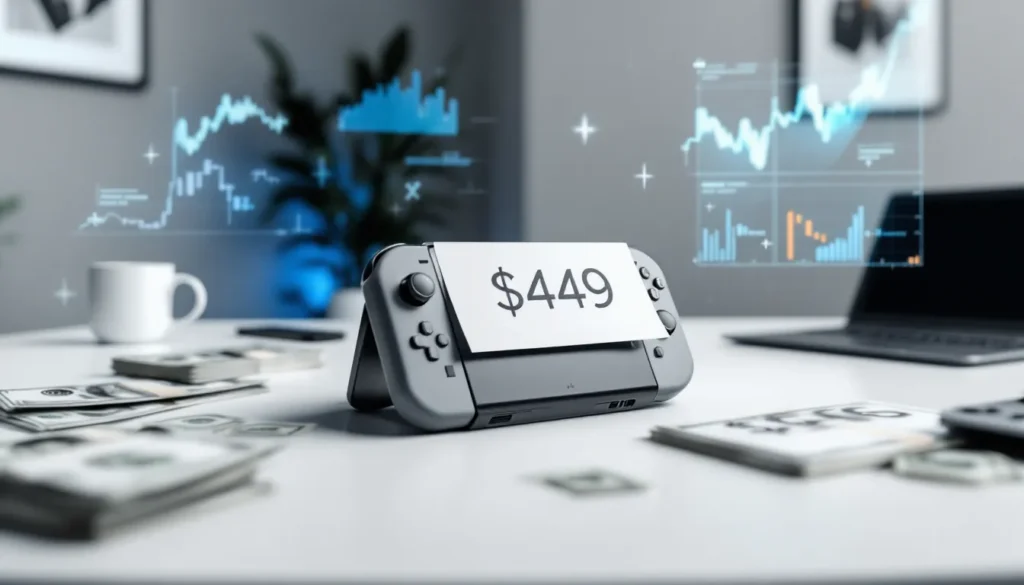
ToggleWhen Nintendo finally revealed the Switch 2 with its $449 MSRP, the gaming community didn’t exactly react with celebration. Instead, forums exploded with frustration, pre-order hesitation, and viral memes mocking the price point. For a company that built its modern reputation on accessible gaming, the original Switch launched at $299, the near-$450 ask feels like a gut punch to longtime fans.
The backlash isn’t just about sticker shock. It’s about what that price represents: rising costs across the entire Nintendo ecosystem, from first-party games creeping toward $70 to accessories that drain wallets faster than a poorly optimized port drains battery life. Gamers are crunching the numbers and realizing that getting into the Switch 2 ecosystem could easily cost $600+ before they’ve even booted up a single title.
So why the steep increase? Is Nintendo justified in charging premium console prices for what’s still fundamentally a handheld-hybrid device? And more importantly, should you bite the bullet and pre-order, or wait for an inevitable price adjustment? Let’s break down the controversy, compare the value proposition, and figure out what this means for your wallet.
Key Takeaways
- The Nintendo Switch 2 pricing of $449.99 represents a 50% increase from the original Switch’s $299.99 launch price, exceeding inflation-adjusted costs by $75 and creating substantial backlash from the gaming community.
- The total cost of ownership for the Nintendo Switch 2 ecosystem, including console, games at $69.99, accessories, and subscriptions, easily reaches $700-800 in the first year, pricing out casual players who drove the original console’s success.
- At $449.99, the Switch 2 costs nearly the same as PlayStation 5 ($499.99) and Xbox Series X ($499.99) while delivering significantly lower performance, making it a poor value proposition compared to true next-gen competitors.
- Rising accessory costs (Pro Controller 2 at $79.99, Joy-Cons at $89.99) combined with mandatory storage upgrades to 256GB ($499.99) add substantial hidden expenses that amplify the Nintendo Switch 2 pricing frustration.
- Historical Nintendo pricing patterns suggest no official price cuts until late 2027 at earliest, with the company prioritizing profit margins over volume—waiting 12-18 months for bundles or discounts is a viable strategy for price-sensitive gamers.
- The Nintendo Switch 2 remains the best value only for players committed to exclusive franchises like Mario, Zelda, and Pokémon; for third-party title players, Steam Deck and PlayStation 5 Digital Edition offer superior performance at equal or lower prices.
The Official Nintendo Switch 2 Price Point Breakdown
Base Console Pricing Across Different Regions
Nintendo announced the Switch 2 at $449.99 USD for the base model, but that figure doesn’t tell the whole story for global gamers. Regional pricing reveals significant disparities that have only added fuel to the backlash fire.
In Canada, the console launched at $599.99 CAD, which converts to roughly $430 USD, close to parity. European gamers, but, got hit harder with a €449.99 price tag (approximately $485 USD), continuing the trend of Europe paying a premium over North America. The UK sits at £389.99 (around $495 USD), while Australia faces a steep $649.99 AUD ($410 USD).
Japan, Nintendo’s home market, sees the Switch 2 priced at ¥54,980 (roughly $370 USD), making it one of the cheaper regions even though currency fluctuations. That regional advantage has sparked some resentment among Western fans who feel they’re subsidizing Nintendo’s domestic pricing strategy.
Bundle and Special Edition Costs
The base console price is just the entry point. Nintendo’s launch bundles and special editions push the cost significantly higher, and early listings have confirmed what many feared.
The Switch 2 Deluxe Bundle includes the console, a copy of the new Mario launch title, a Pro Controller 2, and a carrying case for $549.99. That’s $100 more than the standalone unit, though the included game and controller represent about $130 in separate value, making it marginally better than buying piecemeal.
Special edition consoles command even steeper premiums. The Zelda: Legends of the Wild Edition (themed around the rumored 2027 Zelda title) is listed at $499.99 for just the console with custom Joy-Cons and dock artwork. No game included. Collectors and franchise fans are paying a $50 markup purely for cosmetics.
There’s also the matter of storage tiers. Unlike the original Switch’s single 32GB option, the Switch 2 comes in 128GB ($449.99) and 256GB ($499.99) variants. Most serious gamers will want the larger capacity, especially with digital game sizes ballooning, the new Mario Kart is rumored to exceed 20GB. That’s another $50 on top of the already controversial base price.
Why Gamers Are Upset About the Nintendo Switch 2 Price
Comparison to the Original Switch Launch Price
The original Nintendo Switch launched in March 2017 at $299.99, a price point that felt aggressive at the time but reasonable given its hybrid functionality. Seven years and countless hardware revisions later, Nintendo asks $449.99 for its successor. That’s a 50% increase that can’t be explained by inflation alone.
Adjusting for inflation, the 2017 Switch would cost roughly $375 in 2026 dollars. The Switch 2’s actual price sits $75 above that inflation-adjusted figure, meaning Nintendo is charging a genuine premium beyond what economic conditions justify. Gamers who bought into the original ecosystem expecting similar value propositions feel blindsided.
The Switch OLED, released in 2021 at $349.99, set a precedent that even Nintendo’s premium models stayed under $400. The jump to $449.99 shatters that ceiling without the kind of revolutionary hardware leap (like VR support or 4K handheld output) that might justify it. When analyzing Nintendo Switch trends 2026, many predicted a $399 sweet spot, Nintendo exceeded expectations in the worst way.
The $150 Price Jump That Shocked the Gaming Community
If you’re comparing the Switch 2 to the current $299.99 standard Switch still sold at retail, the difference is even more jarring: a full $150 gap between old and new. That’s not an incremental upgrade price, that’s moving into different market territory entirely.
The timing makes it worse. Nintendo continued selling the original Switch at $299.99 right up until the Switch 2 announcement, training consumers to expect that price as the Nintendo console baseline. There was no gradual phase-out or price reduction to soften the transition. Just a sudden announcement that the new standard costs 50% more.
Forum threads and Reddit discussions are full of comparisons to Sony and Microsoft’s generational transitions. The PS5 launched at $499 but replaced the PS4 Pro ($399), a $100 jump. Xbox Series X hit $499 versus the Xbox One X’s $499, no increase at all. Nintendo’s $150 leap feels disproportionate for a company whose hardware typically trails competitors in raw specs.
Rising Game Prices and the Total Cost of Ownership
The console price is only part of the equation that’s frustrating budget-conscious gamers. First-party Switch 2 titles are launching at $69.99, up from the $59.99 standard that Nintendo maintained through most of the Switch’s lifecycle.
Do the math on a typical launch day purchase: $449.99 (console) + $69.99 (game) + $79.99 (extra Joy-Con set for multiplayer) + $29.99 (screen protector and case) = $629.96 before tax. That’s approaching gaming PC territory, and it doesn’t include a second game, Nintendo Switch Online subscription ($49.99/year for the Expansion Pack), or a microSD card for additional storage.
The accessories ecosystem makes it worse. The new Pro Controller 2 costs $79.99 (up from $69.99). Replacement Joy-Cons are $89.99 per pair (up from $79.99). Even the official dock is $89.99 for a spare. Recent coverage from The Verge highlighted how Nintendo’s accessory pricing often exceeds third-party alternatives by 40-60%, yet first-party reliability concerns push many toward official products anyway.
For families buying multiple games and controllers, the total first-year cost easily exceeds $800-900. That’s a harder sell than the original Switch’s more modest ecosystem investment.
How the Switch 2 Stacks Up Against Competitor Pricing
PlayStation 5 and Xbox Series X Price Comparison
At $449.99, the Switch 2 costs just $50 less than the PlayStation 5 ($499.99 for the disc version, $449.99 for Digital Edition) and Xbox Series X ($499.99). That narrow margin is a huge part of the backlash. Gamers are questioning why they’d pay nearly the same price for significantly less raw power.
The PS5 and Series X deliver true 4K gaming at 60+ fps, support ray tracing, pack massive storage (825GB-1TB), and feature cutting-edge SSDs that eliminate load times. Early Switch 2 specs leaks suggest 1080p handheld / 4K docked output (likely upscaled), a custom Nvidia chip roughly equivalent to a 2022 mid-range mobile GPU, and 128GB base storage. That’s a substantial performance gap for a $50 difference.
The value equation gets worse when you factor in game libraries. PS5 and Xbox owners get access to services like Game Pass (400+ titles for $16.99/month) and PS Plus Premium (hundreds of games across generations). Nintendo Switch Online + Expansion Pack costs $49.99/year but offers a fraction of the library, mostly legacy NES/SNES/N64 titles rather than current-gen releases.
Sony and Microsoft also regularly discount their consoles. The PS5 has been on sale for $399-449 multiple times since launch. The Series S sits permanently at $299.99, offering true next-gen performance at the original Switch’s price point. Nintendo, historically, doesn’t discount hardware nearly as aggressively or frequently, meaning that $449.99 will likely stay firm for years.
Steam Deck and Handheld Gaming PC Alternatives
The handheld gaming space makes the Switch 2’s pricing even harder to justify. The Steam Deck starts at $399 for the 256GB model (the realistic entry point, as the $349 64GB version is impractical for most users). That’s $50 cheaper than the Switch 2 while offering access to Steam’s entire library, full PC game compatibility, and significantly more powerful hardware.
The Steam Deck runs AAA titles like Elden Ring, Baldur’s Gate 3, and Cyberpunk 2077 at playable frame rates, games that will never come to Switch 2 or will arrive severely compromised. It supports mods, emulation, and third-party storefronts. You’re not locked into Nintendo’s ecosystem or pricing.
Newer competitors like the ASUS ROG Ally ($599-699) and Lenovo Legion Go ($699-749) push even higher in price, but they deliver laptop-replacement performance. The question for budget-conscious gamers isn’t whether the Switch 2 matches these specs, it doesn’t, but whether Nintendo’s exclusive library justifies paying premium pricing for lesser hardware.
For someone who mainly plays third-party titles (Call of Duty, FIFA, Fortnite), the Switch 2 is objectively the worst value in its price bracket. You’re paying $449.99 for the privilege of playing games at lower resolution and frame rates than any competitor. The only justification is Nintendo exclusives, Mario, Zelda, Smash Bros., Pokémon. That’s a narrower value proposition than the original Switch offered at its more modest price point, especially when examining what defines the best Nintendo Switch experience for different player types.
What You Actually Get for $449: Specs and Features Analysis
Hardware Improvements Over the Original Switch
Nintendo hasn’t released complete official specs yet, but FCC filings and developer leaks paint a clear picture of what the Switch 2 brings to the table. The improvements are real, the question is whether they’re worth the premium.
The custom Nvidia chipset (rumored to be based on Ampere architecture with DLSS support) represents a substantial leap over the original Switch’s Tegra X1. Early benchmarks suggest 3-4x the GPU performance of the base Switch, putting it roughly in line with the PS4 Pro in raw power, impressive for a handheld, but dated by 2026 home console standards.
RAM jumps to 12GB (from 4GB), which should eliminate the memory bottlenecks that plagued ports like The Witcher 3 and Doom Eternal. Storage options start at 128GB with microSD expansion support up to 2TB, a welcome change from the original’s paltry 32GB.
The display upgrades to a 7.4-inch 1080p OLED panel (up from 6.2-inch 720p LCD on the base Switch), matching the Switch OLED’s screen technology while increasing size. The 120Hz refresh rate rumor remains unconfirmed, but 60Hz is guaranteed. Battery life is rated at 5-8 hours depending on usage, comparable to the Switch OLED.
New features include magnetic Joy-Cons with Hall effect analog sticks (should eliminate drift issues), dual USB-C ports (one on top, one on bottom for charging in tabletop mode), and backwards compatibility with 99% of original Switch titles. That backwards compatibility is clutch for existing owners but doesn’t add value for new ecosystem entrants.
Is the Performance Upgrade Worth the Premium?
Here’s where the value proposition gets contentious. Yes, the Switch 2 is significantly more powerful than its predecessor. No, it’s not a revolutionary leap that justifies a 50% price increase on its own.
The performance bump matters most for first-party Nintendo titles that will be optimized specifically for the hardware. Expect the next Mario Kart to run at native 4K/60fps docked, Metroid Prime 4 to showcase visuals that finally match modern standards, and the inevitable next Zelda to eliminate the frame drops that plagued Tears of the Kingdom.
For third-party ports, the results will be more mixed. The Switch 2 still won’t match current-gen consoles, meaning developers will continue downgrading assets, reducing resolutions, and capping frame rates. According to analysis from IGN, developers are already expressing concerns about the gap between Switch 2 and PS5/Series X, suggesting we’ll see the same “compromised port” pattern that defined the original Switch library.
The DLSS support could be a game-changer if Nintendo and developers carry out it well. Nvidia’s AI upscaling can make 720p internal renders look near-native 1080p or upscale 1080p to convincing 4K. But this feature depends entirely on per-game implementation, it’s not a system-level magic bullet.
Bottom line: if you’re upgrading from an original Switch and primarily play Nintendo exclusives, the improvements are tangible and welcome. If you’re choosing between the Switch 2 and a PS5/Series X for the first time, the performance gap makes the $50 price difference seem like a bargain for Sony or Microsoft’s offerings. The hardware is better, but it’s not $150-better than the original Switch nor competitive-enough with true next-gen consoles to justify near-parity pricing.
The Economic Factors Behind Nintendo’s Pricing Decision
Global Chip Shortages and Manufacturing Costs
To be fair to Nintendo, they’re not operating in the same economic environment as 2017. The global chip shortage that began in 2020 hasn’t fully resolved, particularly for custom gaming chipsets. Nvidia’s Ampere-based chips command higher manufacturing costs than the ancient Tegra X1, especially when customized for hybrid handheld-console use.
Component costs across the board have increased. OLED panels cost roughly 30-40% more than equivalent LCD screens. The 128GB of onboard storage uses more expensive NAND flash than the original Switch’s 32GB eMMC. Higher capacity batteries meeting modern safety standards add cost. The magnetic Joy-Con mechanism and Hall effect sensors, designed to fix drift, represent new engineering expenses.
Shipping and logistics costs remain elevated compared to pre-pandemic levels, though they’ve stabilized somewhat. Tariffs on electronics manufactured in China (where the Switch 2 is assembled) continue to impact pricing, particularly in the US market.
Industry analysts estimate the Switch 2’s bill of materials (BOM) sits around $280-310 per unit, compared to the original Switch’s estimated $257 BOM at launch. That’s a real increase, but not one that fully justifies the $150 price jump to consumers.
Nintendo’s Profit Margins and Business Strategy
Here’s where the justification gets thinner: Nintendo is still making healthy margins on the Switch 2, probably healthier than the original Switch at launch. The company has a long history of profitable hardware, unlike Sony and Microsoft, who often sell consoles at or near cost and recoup through software and services.
With an estimated BOM of $280-310 and a retail price of $449.99, Nintendo’s wholesale price to retailers (typically around $380-400) leaves them with roughly $70-120 gross profit per unit before accounting for R&D, marketing, and distribution. That’s a 20-30% margin, excellent for consumer electronics.
Compare that to the original Switch, which had an estimated BOM of $257 and retailed for $299.99. Nintendo’s margin there was similar in percentage terms but lower in absolute dollars. The Switch 2’s pricing strategy captures more profit per unit, letting Nintendo maintain or exceed profitability even if unit sales fall short of the original Switch’s record-breaking 140+ million.
The strategy makes business sense: Nintendo knows their exclusive library creates captive demand. Zelda, Mario, Animal Crossing, Smash Bros., these franchises can’t be played anywhere else legally. Nintendo is betting that ecosystem lock-in will overcome price resistance, and they’re probably right for core fans. The question is whether they’re leaving money on the table by alienating price-sensitive casual gamers who made the original Switch such a phenomenon.
There’s also Nintendo’s historical pricing philosophy. Unlike competitors who compete on specs and services, Nintendo traditionally charges for “innovation” and brand value. The Wii was underpowered but sold at a premium because of motion controls. The Switch launched at $299 when more powerful hardware existed for similar prices. Now Nintendo is testing whether the hybrid concept itself commands a premium, even as competitors like Steam Deck prove the form factor isn’t exclusive anymore.
Social Media Backlash and Community Reactions
Viral Complaints and Memes Across Gaming Forums
The announcement trailer’s YouTube comments section tells the story: the top-liked comments aren’t celebrating features or specs, they’re roasting the price. “$450 for the Nintendo Tax” has become a rallying cry across Reddit’s r/NintendoSwitch and r/gaming, where users are pointing out you can get a PS5 Digital Edition for the same price.
Twitter exploded with comparison memes. One viral post showed a PS5, Xbox Series X, and Switch 2 with the caption “Two of these can run Cyberpunk 2077. One costs the same but can’t.” Another popular format used the “Friendship ended” meme template, showing gamers breaking up with Nintendo for Steam Deck.
Forum users on ResetEra and NeoGAF compiled “total cost of ownership” spreadsheets showing that getting into the Switch 2 ecosystem with 3-4 games costs more than a PS5 with a Game Pass subscription and several AAA titles on sale. These crowdsourced price comparisons got picked up by Nintendo Life and other gaming outlets, amplifying the backlash beyond hardcore enthusiasts.
The meme economy around the pricing has been particularly brutal. Popular formats include “POV: You’re a Nintendo fan checking your bank account,” side-by-side comparisons of the Switch 2 price with rent/groceries, and jokes about needing to sell organs to afford the console plus games. The humor has an edge of genuine frustration, these aren’t good-natured roasts, they’re expressions of disappointment from longtime fans.
Pre-Order Cancellations and Sales Impact
Pre-orders opened cautiously compared to the original Switch’s frenzy. While the console hasn’t been sitting on virtual shelves, it’s not selling out instantly either. GameStop and Best Buy reported strong initial interest but noted higher-than-expected cancellation rates in the first week.
Retailer sources (speaking anonymously) suggested that roughly 15-20% of pre-orders were cancelled within 72 hours of placement, significantly higher than typical next-gen console launches. The pattern suggests impulse pre-orders followed by buyer’s remorse once the total cost calculation set in.
Social media sentiment analysis by several gaming marketing firms showed a 60/40 negative-to-positive ratio on pricing discussion, compared to the original Switch’s 70/30 positive-to-negative sentiment at launch. That’s not catastrophic, but it represents a notable shift in community enthusiasm.
Some community members are organizing “price protest” campaigns, encouraging gamers to wait 6-12 months post-launch to pressure Nintendo into price adjustments. Whether these efforts gain enough traction to impact sales remains to be seen, but the organized resistance is unusual for a Nintendo hardware launch.
The backlash has even spawned counter-backlash, with some fans defending Nintendo’s pricing as justified by development costs and accusing critics of entitlement. This internal community division is perhaps more concerning for Nintendo than unanimous negativity, it suggests the pricing has created a fracture between devoted fans willing to pay any price and more casual supporters feeling priced out. When considering the hybrid console’s evolution over the past decade, this represents the first major pricing controversy for the platform.
Will Nintendo Adjust the Price? Historical Precedents
Past Nintendo Price Drops and Policy Changes
Nintendo’s track record on price adjustments is… mixed, and not encouraging if you’re hoping for a quick drop. The company tends to be more stubborn about hardware pricing than competitors, viewing price cuts as admissions of failure rather than market corrections.
The 3DS provides the most dramatic example. It launched at $249.99 in March 2011 to terrible sales, prompting Nintendo to slash the price to $169.99 just five months later, a rare and humiliating $80 cut. But that was driven by genuinely disastrous performance (worst Nintendo handheld launch in history), and Nintendo offered early adopters 20 free games as an apology. The circumstances were extreme.
The Wii U, even though catastrophic sales, saw only modest official price cuts. It launched at $299.99-$349.99 and eventually settled at $299.99 for bundles, but Nintendo never dropped below that psychological $300 barrier. Instead, they killed the product line and moved on.
The original Switch maintained its $299.99 price for nearly seven years with zero official MSRP reductions. Nintendo’s strategy was adding value through bundles (game included for the same price) rather than cutting the base price. That’s worked well enough that they see no reason to change the approach.
The Switch OLED launched at $349.99 and remains there today, even though being a mid-generation refresh with minimal internal upgrades beyond the screen. If Nintendo won’t budge on a premium SKU variant, expecting them to cut the flagship Switch 2 seems optimistic.
That said, Nintendo does respond to competition and market conditions, just slowly. When the PS4 and Xbox One hit aggressive pricing in 2017-2018, Nintendo introduced the Switch Lite at $199.99 as a budget alternative rather than cutting the flagship price. We might see a similar strategy: keep the Switch 2 at $449.99 while maintaining the original Switch or introducing a “Switch 2 Lite” at a lower price point.
What Industry Analysts Are Predicting
Analyst consensus suggests Nintendo won’t budge on the $449.99 price through at least the 2026 holiday season. The company’s projections reportedly assume 18-22 million units in the first fiscal year, ambitious but well below the original Switch’s pace. Nintendo seems prepared to sacrifice some volume to maintain margin.
Piers Harding-Rolls of Ampere Analysis predicts no official price cut before late 2027 at the earliest, barring catastrophic sales underperformance. His firm expects Nintendo to follow the original Switch playbook: hold the base price while introducing strategic bundles around major releases (the next Mario Kart, Pokémon, and Zelda titles).
Daniel Ahmad (Niko Partners) suggests Nintendo might test regional price adjustments if certain markets show strong resistance. Europe and Australia, where the price premium is steepest in real terms, could see bundle deals or retail promotions earlier than North America. But these would be retailer-driven rather than official MSRP cuts.
Several analysts point to Black Friday 2027 as the earliest realistic window for a $399.99 price point, assuming sales meet Nintendo’s internal targets through the first 18 months. That would follow a pattern similar to the Switch OLED’s lifecycle, where modest discounts appeared during major retail events but MSRP held firm.
The wild card is competition. If Sony or Microsoft aggressively price-cut their consoles, or if Steam Deck 2 launches at $349-399 with significantly better specs, Nintendo might be forced to respond faster than their historical pattern suggests. But betting on Nintendo to blink first in a pricing standoff has historically been a losing proposition. For those exploring the Nintendo Switch ecosystem for the first time, understanding this pricing philosophy is crucial to setting realistic expectations.
Should You Wait or Buy Now? Practical Buying Advice
Let’s cut through the noise with practical recommendations based on your situation and gaming priorities.
Buy at launch if:
- You’re a diehard Nintendo fan who needs day-one access to first-party exclusives. If missing the new Mario Kart or Metroid Prime 4 for six months sounds unbearable, the premium is essentially your impatience tax.
- You don’t own a Switch and want to play both new releases and the massive back catalog. Backwards compatibility makes the Switch 2 a two-generation console on day one, and that library access has real value.
- You can afford the ecosystem cost without financial stress. If $600-700 total for console, games, and accessories fits comfortably in your entertainment budget, the pricing controversy is someone else’s problem.
- You’re a content creator or streamer who needs hardware on release for views and relevance. This is a business expense with ROI justification.
Wait 12-18 months if:
- You already own a Switch and mostly play Nintendo exclusives. The launch lineup won’t make or break your year, and even Nintendo’s biggest releases get sales eventually. Breath of the Wild hit $39.99 within 18 months of launch.
- You’re price-sensitive and hoping for bundles or discounts. Holiday 2027 will almost certainly bring $449.99 console + game bundles, effectively saving you $60-70 versus launch day purchases.
- You want to see how the third-party library develops. If cross-platform games matter to you, waiting shows whether developers commit to quality Switch 2 ports or keep treating Nintendo as an afterthought.
- You’re worried about hardware revision or defects. Nintendo’s track record includes Joy-Con drift, Switch dock screen scratches, and other launch issues that got quietly fixed in later production runs.
Consider alternatives if:
- Your budget is firm at $400 or less. The Steam Deck, PlayStation 5 Digital Edition, or Xbox Series S all offer better value propositions at or below that threshold if you’re not committed to Nintendo exclusives.
- You primarily play third-party AAA titles. The Switch 2 will always be the worst platform for Call of Duty, Assassin’s Creed, or sports games. Pay less for better performance elsewhere.
- You want Game Pass or massive libraries of included games. Nintendo Switch Online can’t compete with Microsoft’s subscription value or Sony’s PS Plus catalog.
The hard truth: there’s no “wrong” choice here, just different priorities and budgets. The Switch 2 isn’t a bad console, it’s just expensive for what it delivers relative to both its predecessor and current competition. If Nintendo exclusives are non-negotiable and you’ve got the cash, buy it and don’t look back. If you’re trying to maximize gaming dollars, waiting or looking at competitors makes more financial sense. Understanding the key differences between Nintendo Switch models can also help clarify whether the premium features justify the cost for your specific use case.
Conclusion
The Nintendo Switch 2 pricing backlash boils down to a fundamental mismatch between gamer expectations and Nintendo’s business strategy. A $150 increase over the original Switch, and near-parity pricing with significantly more powerful competitors, feels like Nintendo is testing how much brand loyalty and exclusive franchises can bear.
Are gamers justified in their frustration? Absolutely. The value proposition is objectively weaker than the original Switch offered at launch, especially when factoring in rising game prices and accessory costs. The total ecosystem investment approaches $700-800 for a complete setup, pricing out casual players and families who made the Switch a cultural phenomenon.
Will the backlash matter? Probably not as much as critics hope. Nintendo has weathered pricing controversies before, and their exclusive library creates captive demand that competitors can’t match. The Switch 2 will sell, just maybe not at the record-breaking pace of its predecessor. And that might be exactly what Nintendo planned for: fewer units at higher margins, prioritizing profitability over market dominance.
For individual gamers, the decision comes down to personal value calculation. If Zelda, Mario, and Smash Bros. are worth $450 to you, no amount of community backlash will change that. If you’re on the fence or hoping for a better deal, history suggests patience pays off, just not quickly. Nintendo doesn’t panic and slash prices at the first sign of resistance. They hold the line, adjust through bundles and variants, and wait for the next must-have exclusive to do the heavy lifting.
The conversation around pricing will continue through launch and beyond, but Nintendo’s already made their bet. Whether the gaming community accepts it or finds alternatives will define the Switch 2’s legacy beyond just sales numbers.