Table of Contents
ToggleThe Nintendo Switch doesn’t come with a web browser, at least not one you can access from the home screen. That’s frustrating when you want to look up a game guide mid-session or check something without reaching for your phone. But here’s the thing: the Switch does have browser functionality hidden in its system software. It’s just locked behind a few workarounds.
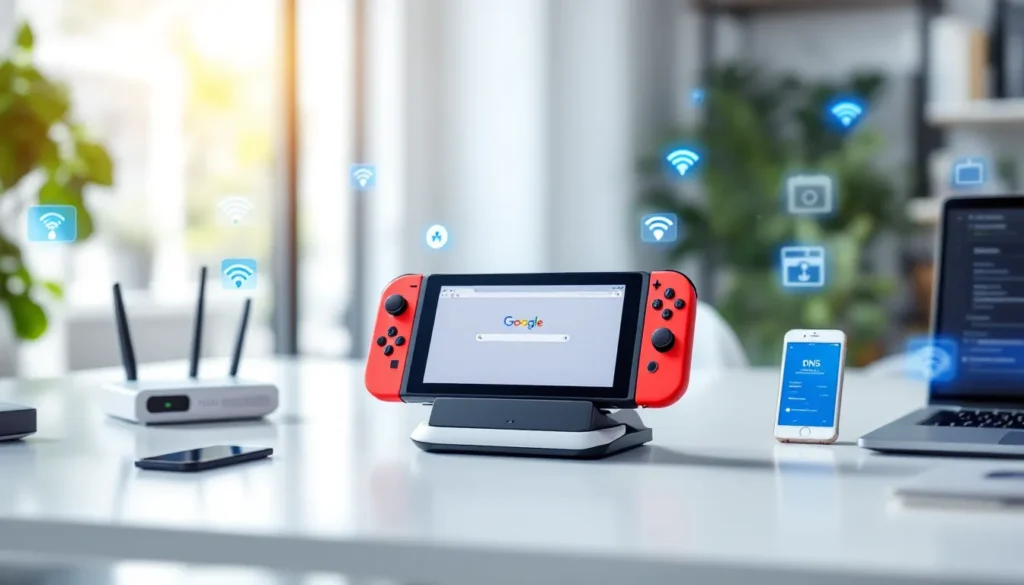
Getting Google on a Nintendo Switch in 2026 requires exploiting built-in features like DNS settings, login pages, or hotspot redirects. These methods aren’t official, and they come with limitations, no bookmarks, no downloads, and sometimes sketchy stability. But if you need basic web browsing on your Switch, they’ll get the job done. This guide covers every method that actually works, step-by-step instructions for each, and what you can realistically expect from browser access on Nintendo’s hybrid console.
Key Takeaways
- The Nintendo Switch has a hidden browser accessible through workarounds like the DNS trick, YouTube login exploit, or Wi-Fi hotspot redirects—allowing you to get Google on your Switch without official support.
- The DNS method is the most reliable way to access Google by changing your Switch’s DNS settings to custom addresses, though it carries minor risks and Nintendo could patch it in future updates.
- The Switch browser only supports basic web browsing with limitations: no downloads, no bookmarks, no cookie storage, and poor video playback, making it best suited for quick game guides, wikis, and text-based searches.
- Browser functionality on Nintendo Switch is slow and crashes frequently, with pages taking 5-10 seconds to load and stability issues after 10-15 minutes of continuous use.
- For most gamers, having a phone or tablet nearby remains a more practical solution than relying on the Switch’s unreliable browser workarounds for accessing Google and other websites.
Understanding the Nintendo Switch Browser Limitations
Why Nintendo Doesn’t Include a Built-In Browser
Nintendo deliberately disabled direct browser access on the Switch. The official reason? Security. Open browsers create vulnerabilities, exploits that could lead to piracy, homebrew installations, or system hacks. The 3DS and Wii U both had browsers, and both were heavily exploited by the modding community.
By locking down browser access, Nintendo protects its ecosystem. It’s the same reason you can’t install apps outside the eShop. The company prioritizes a closed, controlled environment over user convenience. That’s not changing anytime soon.
What You Can and Can’t Do on the Switch
The Switch does have a WebKit-based browser engine built into its firmware. It’s used for login pages when connecting to public Wi-Fi networks and for certain eShop functions. That’s the loophole.
What works:
- Basic web browsing (text, images, simple HTML)
- Google searches and most text-heavy sites
- Lightweight pages like Wikipedia or Reddit
- Video playback on some sites (results vary)
What doesn’t work:
- Downloads of any kind
- Flash or Java content (obsolete anyway)
- Complex JavaScript-heavy sites
- Browser extensions or plugins
- Cookie management or saved passwords
- Multiple tabs
The browser is barebones. Think of it as a 2010-era mobile browser, functional but frustrating for anything beyond quick lookups.
Method 1: Using the Hidden DNS Trick to Access Google
Step-by-Step Setup Process
The DNS method is the most reliable way to access Google on the Switch. It works by routing your connection through a custom DNS server that forces the Switch to display a browser page.
- From the Switch home screen, navigate to System Settings.
- Select Internet from the left sidebar.
- Choose Internet Settings and select your current Wi-Fi network.
- Tap Change Settings.
- Scroll down to DNS Settings and change it from Automatic to Manual.
- Enter these DNS addresses:
- Primary DNS: 045.055.142.122
- Secondary DNS: 008.008.008.008
- Save your settings and select Connect to This Network.
- The connection test will run. When it tries to redirect you to the Nintendo eShop login page, the custom DNS will intercept and load a browser interface instead.
- From the browser page, navigate to Google or any other website.
This method works because the Switch’s captive portal detection (used for public Wi-Fi login pages) triggers the hidden browser. The custom DNS server serves a webpage instead of allowing the normal connection.
Navigating Google Through the DNS Workaround
Once you’re in, the browser functions like any basic mobile browser. Use the touchscreen to tap links, scroll, and enter text. The on-screen keyboard appears when you tap a text field.
Google loads reliably, and most search results work fine. Text-based sites like Reddit, Wikipedia, and news outlets are fully functional. YouTube loads but video playback is hit-or-miss, more on that later. Sites with heavy JavaScript or dynamic content (like Discord or Twitter’s current iteration) struggle or crash.
You can’t bookmark pages, so you’ll need to remember URLs or start from Google every time. The back button works, but there’s no forward button or refresh option. To exit the browser, press the home button, your session won’t save.
Limitations of the DNS Method
The DNS trick has some serious drawbacks. First, you’re changing your Switch’s DNS settings, which could theoretically slow down your connection or cause issues with online games. In practice, using Google’s public DNS (8.8.8.8) as the secondary minimizes this risk.
Second, Nintendo occasionally updates the Switch firmware to patch these workarounds. The DNS method has survived multiple system updates since 2017, but there’s no guarantee it’ll work forever. If a future update blocks it, you’ll need to wait for the community to find a new DNS server address.
Third, the browser is slow. Pages take longer to load than on any modern device. Expect 5-10 seconds for simple pages, longer for anything complex. The Switch’s hardware wasn’t designed for web browsing, and it shows.
Method 2: Accessing Google via YouTube Login Exploit
How the YouTube Workaround Works
The YouTube method leverages a similar loophole but uses a different entry point. When you try to link your YouTube account on the Switch, the system opens a browser to handle Google’s login page. From there, you can navigate to other sites.
This method doesn’t require changing DNS settings, which makes it appealing if you’re worried about affecting your online gaming performance. But, it’s less consistent and Nintendo has patched similar exploits in the past.
Detailed Instructions for the YouTube Method
- Open the YouTube app on your Switch (download it free from the eShop if you don’t have it).
- Navigate to Settings within the YouTube app (gear icon).
- Select Sign In.
- The Switch will display a browser window with Google’s login page.
- Instead of signing in, tap the address bar at the top.
- Type google.com and navigate to Google’s homepage.
- From here, you can search and browse like the DNS method.
The trick is that you’re hijacking the login flow. Google’s authentication page is a fully functional browser instance, and once you’re in, you can navigate away from the login prompt.
Some users report success with the Niconico app using a similar method. If YouTube doesn’t work (Nintendo has restricted it in some regions or firmware versions), try downloading Niconico from the Japanese eShop and following the same steps during account linking.
Keep in mind this method only works while the login window is open. If you complete the login or close the app, the browser disappears. You’ll need to restart the process each time you want to browse.
Method 3: Using Wi-Fi Hotspot Redirect Pages
Setting Up a Custom Hotspot for Browser Access
This method requires a secondary device, a smartphone, laptop, or router that can create a Wi-Fi hotspot with a custom captive portal page. It’s more technical than the previous methods but offers the most control.
Here’s the concept: when the Switch connects to certain Wi-Fi networks, it checks for a captive portal (the login page you see at hotels or coffee shops). If it detects one, it opens the hidden browser. You can create your own captive portal that redirects to Google or any site you choose.
Steps using a smartphone hotspot:
- Enable the hotspot on your phone and note the network name.
- On your computer, set up a captive portal using software like Raspberry Pi’s captive portal scripts or router firmware like DD-WRT.
- Configure the portal to redirect to google.com.
- Connect your Switch to the hotspot.
- The Switch will detect the captive portal and open the browser automatically.
Alternatively, some public Wi-Fi networks naturally trigger this behavior. Coffee shops, airports, and hotels often use captive portals, and connecting to these networks on your Switch will open the browser. Once you’re past the login screen, you can navigate to Google.
This method is less practical for everyday use, you won’t carry a Raspberry Pi just to browse on your Switch. But if you’re at a location with public Wi-Fi, it’s worth trying.
Pros and Cons of the Hotspot Method
Pros:
- No DNS changes required
- More reliable on certain firmware versions
- Works even if Nintendo patches other methods
- You can customize the landing page
Cons:
- Requires a secondary device or specific network setup
- Not portable or convenient
- Public Wi-Fi can be slow or insecure
- Captive portal detection doesn’t always trigger consistently
If you’re determined to browse regularly on your Switch, the DNS method is still more practical. But the hotspot approach is a solid backup if other methods fail.
What You Can Actually Do with Google on Your Switch
Browsing Capabilities and Performance
Once you’re in, the Switch browser handles basic tasks reasonably well. Google searches work as expected, you type a query, tap search, and get results. Clicking through to Wikipedia, Reddit, or news sites is smooth enough for quick information lookups.
Video playback is inconsistent. YouTube’s mobile site sometimes works, sometimes crashes. MP4-embedded videos on news sites might play, but don’t expect HD quality. The Switch’s browser lacks hardware acceleration for video, so anything beyond 480p stutters badly.
Forms and text entry are tedious. The on-screen keyboard is functional but slow, typing out long searches or forum posts is painful. If you’re used to a phone’s autocorrect and swipe typing, the Switch will feel like a downgrade.
Images load, but high-res photos take time. Sites with heavy CSS or JavaScript (like modern Reddit’s redesign) struggle. Old Reddit works better. Twitter/X barely functions due to its dynamic content loading. Discord’s web version crashes frequently.
The browser doesn’t support cookies between sessions, so you can’t stay logged into accounts. Any site requiring authentication will ask for credentials every time you access it. No saved passwords, no autofill, no form memory.
Practical Uses for Gamers
So what’s actually useful about having Google on your Switch?
Game guides and walkthroughs: You’re stuck on a boss fight or puzzle? Pull up a text guide without leaving your couch or switching devices. Sites like Twinfinite load fine and offer detailed walkthroughs that work well in the Switch browser.
Checking game wikis: Fandom wikis, IGN databases, and community resources are perfect for the Switch browser. They’re mostly text and images, which the browser handles well.
Looking up build guides or tier lists: Mid-session theorycrafting for games like Splatoon 3 or Smash Bros? You can pull up tier lists, character guides, or optimal builds without tabbing out (since there’s no tabbing out on Switch anyway).
Verifying eShop deals: Compare prices, check reviews, or look up Metacritic scores before buying a game. The eShop’s search and discovery tools are notoriously bad, using Google to research purchases makes sense.
Quick fact-checking during multiplayer arguments: Settle disputes about game lore, release dates, or patch notes without pulling out your phone.
It’s not a replacement for a real browser on your phone or PC. But for quick, mid-gaming lookups, it’s surprisingly handy. Many players exploring useful Switch techniques find browser access valuable for on-the-fly research.
Troubleshooting Common Issues
Connection Problems and Fixes
The DNS method sometimes fails to trigger the browser. If the connection test completes normally without opening a browser window, try these fixes:
Clear your DNS cache: Go to System Settings > Internet > Internet Settings, select your network, and choose Delete Settings. Re-enter everything from scratch, including the custom DNS addresses.
Try alternate DNS servers: If 045.055.142.122 doesn’t work, search online for updated DNS addresses. The community-maintained list changes as Nintendo patches servers. As of early 2026, alternative addresses include 104.236.228.223 and others circulating on forums.
Restart your Switch: A full power cycle (hold the power button, select Power Options > Restart) sometimes resolves connection detection issues.
Check your router settings: Some routers block DNS redirection or have security features that interfere. Try connecting to a different Wi-Fi network (like your phone’s hotspot) to isolate the issue.
Verify your DNS entry: Double-check the addresses. A single wrong digit breaks the whole method. The Switch’s number pad makes it easy to mistype.
If the YouTube method fails to open the browser, ensure your YouTube app is updated to the latest version. Nintendo occasionally patches the app to close these exploits, so older versions sometimes work better, but you can’t downgrade apps on the Switch without homebrew.
Browser Crashes and Stability Issues
The Switch browser is fragile. Here’s how to minimize crashes:
Stick to simple sites: Text-heavy pages with minimal JavaScript are most stable. Avoid modern web apps like Discord, Twitter, or anything requiring constant background connections.
Close memory-intensive games first: If you’re running a demanding game in the background (suspended when you open the browser), the Switch’s RAM might max out. Close the game completely before browsing.
Avoid ad-heavy sites: Pop-ups and ad scripts overload the browser quickly. Sites with aggressive advertising (looking at you, most gaming news outlets) crash more often than cleaner alternatives.
Don’t stay in the browser too long: After 10-15 minutes, memory leaks or background processes start causing instability. Exit and restart the browser if you need extended browsing time.
Use mobile versions of sites when possible: If a site offers a mobile/m. subdomain, use that. Desktop sites overtax the Switch’s browser more quickly.
If crashes persist, it might be a firmware issue. Some Switch system updates improve browser stability, others make it worse. There’s not much you can do except wait for the next patch or try alternate methods.
Alternative Solutions for Web Access on Switch
Using the Nintendo Switch Online App
Nintendo’s official smartphone app (iOS and Android) offers limited functionality but zero browser workarounds. You can use it to voice chat in supported games, view stats for Splatoon 3 and Smash Bros, and manage your friend list.
It’s not a browser replacement, but it does solve some problems. If you need to coordinate with teammates or check online rankings, the app handles those tasks natively. It also supports SplatNet 3, which offers gear ordering and battle records that aren’t accessible on the Switch itself.
The app requires a Nintendo Switch Online subscription (paid service, $3.99/month or $19.99/year as of 2026). If you’re already subscribed for online play, it’s worth installing. But it won’t help you browse Google or access web content on your Switch screen.
Companion Devices and Second-Screen Options
Honestly? The best solution is keeping your phone or tablet nearby.
The Switch’s browser workarounds are neat tricks, but they’re frustrating for regular use. A phone loads pages faster, displays them better, and doesn’t crash every ten minutes. If you’re gaming on the couch, your phone is probably within arm’s reach anyway.
For players who want seamless integration, consider a phone stand or tablet holder mounted near your gaming setup. You can glance at guides without fully interrupting gameplay. Some gamers use a second monitor or laptop for guides and streams while playing, common for PC players, less so for console, but Switch in docked mode makes it feasible.
Another option: Steam Deck or other handheld PCs. If web browsing matters enough to impact your device choice, the Steam Deck runs a full Chrome or Firefox browser alongside your games. It’s pricier than a Switch and less focused on Nintendo exclusives, but it’s a genuine alternative for players who value open functionality. Understanding what the Switch offers helps clarify whether its closed ecosystem fits your needs.
For most players, though, the Switch’s gaming library outweighs its lack of a proper browser. Workarounds exist, but they’re supplements, not solutions.
Safety and Security Considerations
Using these browser methods carries some risk, mostly minor, but worth understanding.
DNS changes and data privacy: When you use a custom DNS server, your internet traffic is routed through that server. The DNS provider can theoretically log your browsing activity. Use well-known public DNS options (like Google’s 8.8.8.8 or Cloudflare’s 1.1.1.1) as your secondary DNS to minimize this risk. Avoid obscure DNS addresses from unverified sources, they could redirect your traffic maliciously.
No HTTPS guarantees: The Switch browser supports HTTPS, but it doesn’t always enforce it. Stick to major sites (Google, Wikipedia, Reddit) that use secure connections by default. Avoid entering passwords or payment info, the browser’s security isn’t trustworthy for sensitive data.
Account security: Don’t log into your Nintendo account, email, or social media through the Switch browser. There’s no saved session security, and you can’t verify the browser’s encryption properly. If a site asks you to log in, skip it.
Malware and exploits: The Switch’s closed system makes malware unlikely, but visiting sketchy sites could expose vulnerabilities. Stick to reputable domains. Don’t click random download links (downloads don’t work anyway, but malicious scripts could still cause problems).
Nintendo’s terms of service: These workarounds aren’t officially supported, but they don’t violate Nintendo’s TOS in any meaningful way. You’re not installing homebrew, modifying system files, or pirating games. At worst, Nintendo could patch the methods in a future update. Your account won’t be banned for using DNS tricks or login page exploits.
Public Wi-Fi risks: If you’re using the hotspot method on unsecured public networks, be cautious. Public Wi-Fi is notorious for man-in-the-middle attacks and packet sniffing. Don’t access anything sensitive, keep it to casual browsing only.
These methods are safe for casual use. Just apply common sense: don’t trust the browser with important accounts, stick to known sites, and understand that Nintendo could break these workarounds at any time. Players looking for general Switch guidance will find that official features remain more reliable than these exploits.
Conclusion
Getting Google on the Nintendo Switch in 2026 isn’t plug-and-play, but it’s doable. The DNS trick remains the most reliable method, the YouTube exploit works as a backup, and the hotspot approach offers flexibility for technical users. None of these methods deliver a premium browsing experience, expect slowdowns, crashes, and limitations.
But for quick game guide lookups, checking wikis, or settling mid-session debates, the Switch’s hidden browser gets the job done. It’s a workaround, not a feature, and Nintendo could patch it anytime. Until they do, these tricks give players basic web access on a console that was never meant to have it.
If browser access is a dealbreaker, consider devices with native support. But if you’re here for Nintendo’s exclusives and just want occasional Google access? These methods work well enough.