Table of Contents
ToggleThe Nintendo Switch changed how people think about gaming consoles. Released in March 2017, the Nintendo Switch combines home console power with portable flexibility. Players can enjoy games on a TV screen at home, then take the same device on the road. This hybrid design made the Nintendo Switch one of the best-selling consoles in gaming history. Whether someone wants to play alone or with friends, the Nintendo Switch offers options for every situation. This guide covers everything about the Nintendo Switch, including its features, models, games, and who benefits most from owning one.
Key Takeaways
- The Nintendo Switch is a hybrid gaming console that works as both a home console and a portable device, offering three distinct play modes.
- Nintendo offers three Switch models: the Standard ($299), the handheld-only Lite ($199), and the premium OLED Model ($349) with a larger, higher-quality screen.
- Joy-Con controllers can be shared between two players for instant multiplayer gaming without purchasing additional accessories.
- The Nintendo Switch library features thousands of games, including exclusive titles like The Legend of Zelda, Super Mario, and Pokémon that aren’t available on other platforms.
- Families, commuters, and social gamers benefit most from the Nintendo Switch, while players seeking cutting-edge graphics may prefer PlayStation or Xbox.
Nintendo Switch Overview and Key Features
The Nintendo Switch is a hybrid gaming console made by Nintendo. It works as both a home console and a portable device. This flexibility sets the Nintendo Switch apart from competitors like PlayStation and Xbox.
Three Play Modes
The Nintendo Switch supports three distinct play modes:
- TV Mode: Players dock the console and play on a television screen
- Tabletop Mode: The built-in kickstand props up the screen on any flat surface
- Handheld Mode: Players attach Joy-Con controllers to the sides and play anywhere
Joy-Con Controllers
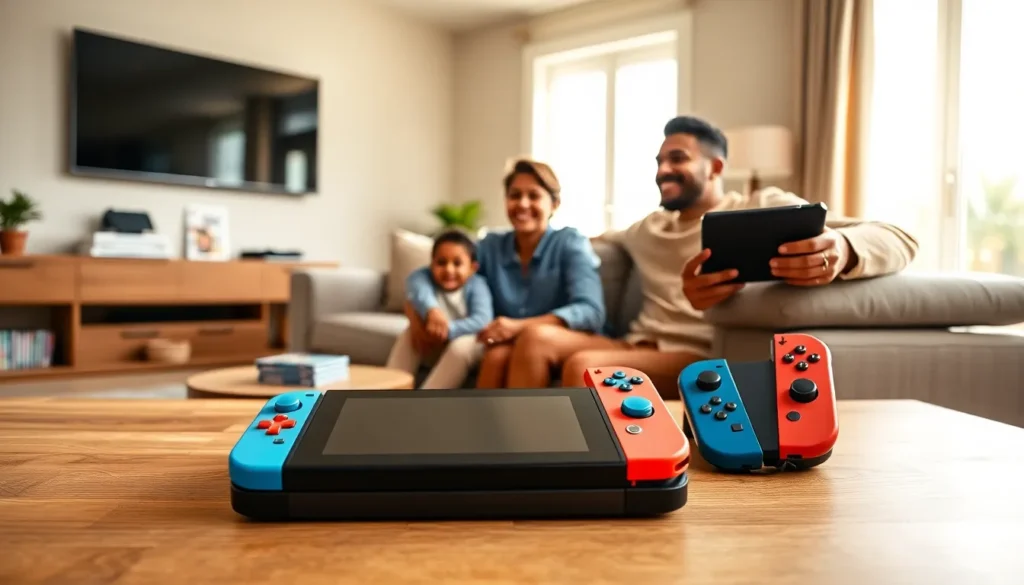
The Nintendo Switch comes with two Joy-Con controllers. These small controllers attach to the main unit or work wirelessly. Each Joy-Con contains motion sensors, HD rumble technology, and an IR camera. Two players can each use one Joy-Con for multiplayer games without buying extra controllers.
Technical Specifications
The Nintendo Switch features a 6.2-inch LCD touchscreen with 1280 x 720 resolution. When docked, the console outputs up to 1080p on compatible televisions. The system includes 32GB of internal storage, expandable via microSD cards up to 2TB. Battery life ranges from 4.5 to 9 hours depending on the game and model.
Online Services
Nintendo Switch Online provides access to online multiplayer, cloud saves, and a library of classic NES and SNES games. The service costs less than competing platforms, making it accessible for casual players.
Different Nintendo Switch Models Explained
Nintendo currently sells three Nintendo Switch models. Each version targets different player preferences and budgets.
Nintendo Switch (Standard Model)
The original Nintendo Switch offers all three play modes. Nintendo released an updated version in 2019 with improved battery life. This model suits players who want the full hybrid experience.
Price: Around $299
Nintendo Switch Lite
The Nintendo Switch Lite launched in September 2019 as a handheld-only option. It cannot connect to a TV or use detachable controllers. The smaller size and lower price make the Nintendo Switch Lite ideal for players who mainly game on the go.
Price: Around $199
Nintendo Switch OLED Model
Nintendo released the Nintendo Switch OLED Model in October 2021. This version features a larger 7-inch OLED screen with better colors and contrast. It includes 64GB of internal storage, an improved kickstand, and enhanced audio. The OLED Model supports all three play modes.
Price: Around $349
Quick Comparison
| Feature | Standard | Lite | OLED |
|---|---|---|---|
| TV Mode | Yes | No | Yes |
| Screen Size | 6.2″ | 5.5″ | 7″ |
| Storage | 32GB | 32GB | 64GB |
| Detachable Joy-Cons | Yes | No | Yes |
How the Nintendo Switch Works
Setting up and using the Nintendo Switch takes just minutes. The console delivers a straightforward gaming experience.
Initial Setup
Players connect the dock to their TV using the included HDMI cable. The Nintendo Switch slides into the dock for TV mode gaming. A simple on-screen process guides users through WiFi connection, account creation, and parental controls.
Playing Games
Nintendo Switch games come on small cartridges that slot into the top of the console. Players can also purchase digital games from the Nintendo eShop. The system stores downloaded games on internal memory or a microSD card.
Switching Between Modes
The transition between modes happens instantly. Lifting the Nintendo Switch from its dock automatically switches the display to the handheld screen. Placing it back in the dock sends the image to the TV. No buttons to press, no settings to change.
Multiplayer Options
The Nintendo Switch supports local and online multiplayer. Up to eight consoles can connect wirelessly for local play. Many games support split-screen on a single console. Online play requires a Nintendo Switch Online subscription for most games.
Charging
The dock charges the Nintendo Switch while it sits inside. For portable play, a USB-C cable connects directly to the console. A full charge takes about three hours.
Popular Games and Entertainment Options
The Nintendo Switch library includes thousands of games across every genre. First-party Nintendo titles remain the biggest draws.
Must-Play Nintendo Exclusives
- The Legend of Zelda: Tears of the Kingdom – Open-world adventure with creative building mechanics
- Super Mario Odyssey – 3D platformer with inventive level design
- Mario Kart 8 Deluxe – Racing game perfect for parties and online competition
- Animal Crossing: New Horizons – Relaxing life simulation on a deserted island
- Super Smash Bros. Ultimate – Fighting game featuring 80+ characters from gaming history
- Splatoon 3 – Colorful multiplayer shooter
Third-Party Support
The Nintendo Switch runs many popular third-party games. Titles like Minecraft, Stardew Valley, Hades, and The Witcher 3 perform well on the hardware. Indie developers particularly favor the platform.
Beyond Gaming
The Nintendo Switch also functions as an entertainment device. Apps like YouTube, Hulu, and Twitch provide streaming options. The touchscreen makes browsing content easy in handheld mode.
Game Prices
First-party Nintendo games rarely drop in price. But, the eShop runs frequent sales on indie and third-party titles. Physical games sometimes cost less at retailers.
Who Should Buy a Nintendo Switch
The Nintendo Switch appeals to specific types of players. Understanding these use cases helps buyers make informed decisions.
Families with Children
Nintendo focuses on family-friendly content. Most Nintendo Switch exclusives carry E or E10+ ratings. The Joy-Con controllers work well for small hands. Parental controls let adults limit playtime and restrict content.
Commuters and Travelers
Anyone who spends time away from home benefits from the Nintendo Switch’s portability. Planes, trains, and waiting rooms become gaming opportunities. The Nintendo Switch Lite offers the most portable option at the lowest price.
Social Gamers
The Nintendo Switch excels at local multiplayer. Handing someone a Joy-Con and starting a game takes seconds. Mario Kart, Smash Bros., and party games turn any gathering into a gaming session.
Nintendo Fans
Players who love Mario, Zelda, Pokémon, and other Nintendo franchises need a Nintendo Switch. These games don’t appear on other platforms. The exclusive library alone justifies the purchase for fans.
Who Might Look Elsewhere
Gamers who prioritize cutting-edge graphics might prefer PlayStation 5 or Xbox Series X. Players focused on competitive online shooters may find better communities on other platforms. The Nintendo Switch targets fun and accessibility over raw power.