Table of Contents
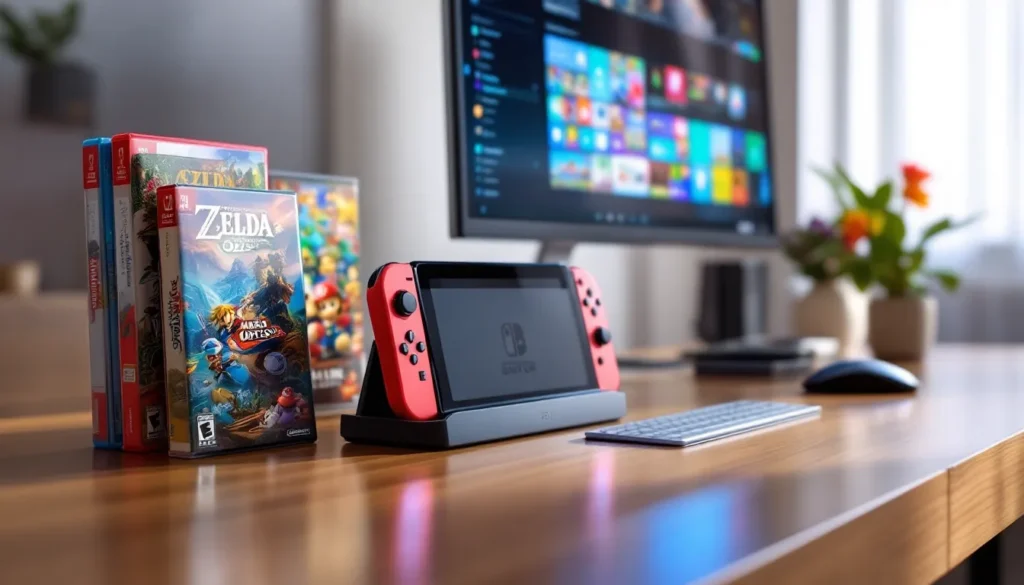
ToggleThe Nintendo Switch has carved out a unique position in the gaming landscape, not just because of its hybrid design, but because of the games you can only play on it. While PlayStation and Xbox chase photorealistic graphics and raw horsepower, Nintendo’s focused on building a library that can’t be replicated anywhere else. From franchise giants like Zelda and Mario to cult favorites like Xenoblade, the Switch’s exclusive lineup is the console’s biggest selling point.
In 2026, that library is deeper and more varied than ever. Whether someone’s hunting for sprawling RPGs, tight platformers, or chaotic party games, the Switch delivers experiences that simply don’t exist on PC, PlayStation, or Xbox. This guide breaks down what makes a game truly exclusive, highlights the must-play titles, and digs into the hidden gems that often get overlooked.
Key Takeaways
- Nintendo Switch exclusives like Zelda: Tears of the Kingdom and Super Mario Odyssey define the platform’s value, offering gameplay innovations and experiences unavailable on PlayStation, Xbox, or PC.
- First-party Nintendo exclusives are permanent fixtures locked to the Switch ecosystem, while third-party exclusives may eventually release on other platforms, making permanent titles the priority for collectors.
- The Switch dominates in RPGs, platformers, and party games, with standout titles including Xenoblade Chronicles 3, Fire Emblem: Three Houses, and Splatoon 3 that rival more powerful hardware through creative design.
- Nintendo’s first-party exclusives rarely drop in price and maintain high resale value, with Black Friday and summer sales offering the only reliable 33% discounts on major titles.
- Upcoming Nintendo Switch exclusives like Metroid Prime 4: Beyond (late 2026) and Pokémon Legends: Z-A will extend the platform’s relevance, though development is shifting toward next-generation hardware.
What Makes a Game a True Nintendo Switch Exclusive?
Not every game marketed as a “Switch exclusive” actually stays that way. The term gets thrown around loosely, but there’s a real difference between a game locked to Nintendo’s ecosystem forever and one that’s just exclusive for now.
First-Party vs. Third-Party Exclusives
First-party exclusives are developed or published directly by Nintendo. Think Mario, Zelda, Pokémon, and Splatoon, franchises Nintendo owns and controls. These games are permanent exclusives: they’ll never show up on Steam, PlayStation Store, or Xbox Game Pass. Nintendo’s first-party teams (EPD, Retro Studios, Monolith Soft) build these titles specifically for Switch hardware, often squeezing out performance that third-party studios struggle to match.
Third-party exclusives come from outside studios but remain Switch-only due to publishing agreements, hardware limitations, or developer choice. Games like Astral Chain (PlatinumGames) and Bayonetta 3 fall into this category. While these are exclusive today, the contracts behind them vary, some are permanent, others are timed.
The distinction matters because first-party games define the platform’s identity. They’re the reason someone buys a Switch in the first place, not just a nice bonus.
Timed Exclusives vs. Permanent Exclusives
Timed exclusives are games that launch on Switch first but eventually migrate to other platforms. Recent examples include titles that debuted as “console exclusives” before hitting PC six months later. Nintendo doesn’t rely on timed exclusives as heavily as Sony or Microsoft, their strategy leans on permanent ownership of key franchises.
Permanent exclusives are locked to the Switch ecosystem indefinitely. Every mainline Mario, Zelda, and Smash Bros. game fits this description. These titles won’t be ported unless Nintendo releases them on a future console (like how Breath of the Wild appeared on both Wii U and Switch).
For players building a library, permanent exclusives should take priority. Timed exclusives might be worth waiting on if someone’s gaming primarily on PC or another console.
The Best Nintendo Switch Exclusives to Play Right Now
The Switch’s top-tier nintendo exclusive games represent some of the best work Nintendo’s ever done. These aren’t just good games, they’re system-sellers that justify the console’s existence.
The Legend of Zelda: Breath of the Wild and Tears of the Kingdom
Breath of the Wild redefined open-world design when it launched in 2017. The physics-driven sandbox, emergent gameplay, and environmental storytelling set a new standard for the genre. Even in 2026, it holds up as one of the best games on the platform.
Tears of the Kingdom took that foundation and went deeper. The Ultrahand building mechanic, massive underground caverns, and sky islands transformed Hyrule into a vertical playground. The game’s creative gameplay mechanics let players approach puzzles and combat in ways the developers never anticipated. Both games run exclusively on Switch, and neither has been announced for other platforms.
Super Mario Odyssey and Super Mario Wonder
Super Mario Odyssey remains the definitive 3D Mario experience. Cappy’s capture mechanic opens up movement options that make every kingdom feel distinct. The post-game content, especially the Darker Side of the Moon, tests platforming skills at a level most AAA games avoid.
Super Mario Wonder launched in late 2023 and brought 2D Mario back to relevance. The Wonder Flower transformations inject unpredictability into every level, and the badge system adds light customization without overcomplicating the formula. It’s the best traditional Mario platformer since World on the SNES.
Super Smash Bros. Ultimate
With 89 playable fighters, over 100 stages, and a roster that spans gaming history, Smash Ultimate is the most complete platform fighter ever made. The final DLC fighter (Sora from Kingdom Hearts) dropped in 2021, and the game’s competitive scene remains active in 2026. Balance patches ended, but the meta’s still evolving as players discover new tech and matchup strategies.
For casual players, it’s an unmatched party game. For competitive players, it’s a deep, technical fighter with a skill ceiling that rivals traditional fighting games.
Animal Crossing: New Horizons
New Horizons became a cultural phenomenon during 2020, but it’s more than a pandemic-era curiosity. The 2.0 update in 2021 added Brewster’s café, cooking, and expanded customization options that addressed most of the game’s early criticisms. It’s still the best life-sim on the market, and its social features make it a go-to chill game for millions of players.
Splatoon 3
Splatoon 3 refined the series’ ink-based shooter formula with Splatsville’s punk aesthetic and deeper progression systems. The Salmon Run co-op mode got expanded with new boss encounters and difficulty tiers, while Turf War and Ranked modes continue to receive seasonal updates. The game’s art direction and movement feel remain unmatched, no other shooter plays like Splatoon.
Metroid Dread and Metroid Prime Remastered
Metroid Dread proved that 2D Metroid still has a place in the modern gaming landscape. The E.M.M.I. encounters add tension without feeling cheap, and Samus controls better than she ever has. It’s fast, challenging, and rewards sequence-breaking in ways that make speedrunners drool.
Metroid Prime Remastered brought the GameCube classic to Switch with overhauled visuals and gyro aiming. It’s the best way to experience one of the greatest first-person adventure games ever made, and it runs at a locked 60fps in both docked and handheld modes.
Hidden Gems and Underrated Switch Exclusives
Beyond the heavy hitters, the Switch has a library of exclusives that fly under the radar. These games don’t get the marketing push of Mario or Zelda, but they’re just as worthy of attention.
Severance Chronicles Series
The Xenoblade Chronicles trilogy represents some of the best JRPG storytelling and world-building of the past decade. Xenoblade Chronicles 3 (2022) closed out Klaus’s saga with a narrative that ties together threads from the entire series. The combat system blends real-time action with MMO-style cooldown management, and the open zones rival anything in Breath of the Wild for scale.
Xenoblade Chronicles 2 has a divisive anime aesthetic and gacha-style Blade system, but the story payoff in the final chapters makes it worth pushing through the slower opening. Xenoblade Chronicles: Definitive Edition remains the most accessible entry point, it’s the tightest, most focused game in the series.
All three games are 100+ hour adventures with some of the best soundtracks in gaming. Monolith Soft doesn’t miss.
Fire Emblem: Three Houses and Engage
Fire Emblem: Three Houses (2019) modernized the series with a Persona-style calendar system and branching story paths. Each of the three houses offers a distinct perspective on the game’s war-torn continent, and the choice of which house to lead has real narrative weight. The tactical combat remains the series’ core strength, but the monastery sections add character development that makes permadeath hit harder.
Fire Emblem Engage (2023) took a different approach, lighter story, heavier focus on tactical depth. The Emblem Ring system lets players summon heroes from past Fire Emblem games mid-battle, adding a layer of strategy that rewards series veterans. It’s more mechanically complex than Three Houses, but less emotionally investing.
Both games stand among the best strategy experiences available on Switch.
Astral Chain and Bayonetta 3
PlatinumGames carved out a niche on Switch with these two action exclusives. Astral Chain blends stylish combat with light detective work and environmental puzzles. Controlling both the player character and their Legion summon simultaneously takes getting used to, but once it clicks, the combat system reveals incredible depth.
Bayonetta 3 went bigger than its predecessors with kaiju-scale battles and expanded exploration. The multiverse plot gets messy, but the core loop of dodge-offsetting and building Witch Time combos remains as satisfying as ever. Both games run surprisingly well on Switch hardware, even when the screen fills with particle effects.
Nintendo Switch Exclusives by Genre
The Switch’s exclusive library covers nearly every genre, but some categories are deeper than others. Here’s where the platform excels.
Best Exclusive RPGs and Adventure Games
The RPG category is stacked with nintendo switch exclusive games that span multiple subgenres:
- Xenoblade Chronicles 3 – Epic JRPG with real-time combat and 100+ hour story
- Fire Emblem: Three Houses – Tactical RPG with branching narrative paths
- The Legend of Zelda: Tears of the Kingdom – Open-world action-adventure with physics-driven exploration
- Pokémon Scarlet/Violet – Open-world monster collector with co-op raids (performance issues aside)
- Triangle Strategy – HD-2D tactical RPG with meaningful choice systems
Each of these games offers 50+ hours of content, and most have replay value built into their structure. The Switch might not have the raw power for Unreal Engine 5 showcases, but it’s drowning in deep RPG experiences.
Top Exclusive Platformers and Action Games
Platformers remain Nintendo’s bread and butter, and the Switch generation delivered some of the best in the company’s history:
- Super Mario Odyssey – 3D collectathon with endgame challenges that rival Celeste for difficulty
- Super Mario Wonder – 2D Mario at its creative peak
- Metroid Dread – Fast, challenging 2D action with modernized controls
- Kirby and the Forgotten Land – Surprisingly robust 3D platformer with co-op
- Donkey Kong Country: Tropical Freeze – Wii U port, but one of the tightest 2D platformers ever made
The variety here goes beyond surface-level differences. Odyssey rewards exploration and experimentation, Wonder focuses on constant novelty, and Dread demands precision and pattern recognition. There’s a platformer for every skill level and preference.
Must-Play Exclusive Multiplayer and Party Games
The Switch dominates the couch co-op and party game space in ways PlayStation and Xbox don’t even attempt:
- Super Smash Bros. Ultimate – 4-8 player chaos with 89 fighters
- Mario Kart 8 Deluxe – Still the best kart racer available (technically a Wii U port, but definitive on Switch)
- Splatoon 3 – 4v4 online shooter with ongoing seasonal support
- Mario Party Superstars – Returns to classic N64 boards with refined minigames
- Super Mario Party – Lighter option for casual players
These games justify the Switch’s local multiplayer focus. The Joy-Con controllers make it easy to jump into multiplayer sessions without buying extra hardware, and the portable design turns the console into a party anywhere.
Upcoming Nintendo Switch Exclusives to Watch in 2026 and Beyond
Nintendo’s been tight-lipped about future releases, but several confirmed and rumored projects are worth tracking.
Metroid Prime 4: Beyond finally resurfaced with a June 2025 trailer after years of silence. The game’s targeting a late 2026 release window, though Nintendo hasn’t committed to a firm date. Early footage shows a shift to more open environments while maintaining the series’ exploration-focused design. It’s the biggest first-party release on the horizon.
Pokémon Legends: Z-A was announced for 2025 and focuses on Kalos region lore. The Legends format proved successful with Arceus, and Z-A’s rumored to improve performance issues that plagued Scarlet/Violet. No confirmed release date yet, but late 2026 seems likely.
Hollow Knight: Silksong has been in development limbo since its 2019 announcement. Team Cherry confirmed Switch as the lead platform, but updates have been sparse. When it finally drops, it’ll be one of the platform’s biggest indie releases.
Beyond these confirmed titles, rumors point to a new 3D Donkey Kong from EPD Tokyo (the Odyssey team) and a potential Mario Kart 9 reveal sometime in 2026. Nintendo typically announces games 6-12 months before release, so expect more details at future Nintendo Direct presentations.
Industry watchers at VGC have reported that Nintendo’s shifting resources toward its next-generation hardware, which could mean the Switch’s exclusive pipeline slows down in late 2026 and 2027. That makes the next 12 months critical for anyone looking to round out their Switch library.
How Nintendo Switch Exclusives Compare to Other Platforms
Exclusives define platforms, and each console manufacturer takes a different approach. The Switch’s library stands out for reasons that go beyond raw game quality.
Why Nintendo’s First-Party Lineup Remains Unmatched
Nintendo owns more iconic franchises than any other platform holder. Mario, Zelda, Pokémon, Animal Crossing, Splatoon, Smash Bros., Metroid, Kirby, Donkey Kong, each of these is a multi-million seller that can’t be played anywhere else. Sony and Microsoft have strong first-party studios, but they don’t have the same breadth of family-friendly, multigenerational franchises.
The other factor is consistency. Nintendo’s first-party teams rarely miss. When a mainline Zelda or Mario releases, it’s almost guaranteed to be a high-quality, polished experience. Third-party exclusives on other platforms are more hit-or-miss.
Finally, Nintendo’s games hold value longer. A copy of Breath of the Wild from 2017 still sells for near-full price in 2026. PlayStation and Xbox exclusives drop to $20-30 within a year. Nintendo’s pricing strategy frustrates bargain hunters, but it reflects confidence in their library’s longevity.
Switch Exclusives vs. PlayStation and Xbox Exclusives
PlayStation’s exclusive lineup skews toward cinematic, story-driven action games, God of War, The Last of Us, Horizon, Spider-Man. These are technical showcases with Hollywood production values, but they’re also more homogeneous in genre and tone.
Xbox’s first-party strategy relies heavily on Game Pass and cross-platform releases. Most “Xbox exclusives” also launch on PC day one, which dilutes the console’s identity. Halo, Gears, and Forza are strong franchises, but they don’t move hardware the way Mario and Zelda do.
The Switch’s exclusives prioritize gameplay systems and replayability over graphics and narrative. That’s not to say Nintendo games lack story (Xenoblade and Fire Emblem prove otherwise), but the focus is different. A game like Tears of the Kingdom succeeds because of what players can do, not just what they watch.
Coverage from outlets like IGN consistently ranks Nintendo’s first-party output among the industry’s best, even when competing against Sony’s AAA blockbusters. The Switch might not render at 4K, but its exclusive library rivals, and often surpasses, what’s available on more powerful hardware.
Tips for Building Your Switch Exclusive Game Library
The Switch’s library is massive, and building a collection requires strategy, especially given Nintendo’s notoriously slow price drops.
When to Buy: Sales, Bundles, and Nintendo Vouchers
Nintendo first-party games rarely go on sale, but when they do, the discount is usually 33% off ($40 instead of $60). These sales typically happen during:
- Black Friday – Late November, best annual sales
- E3/Summer Game Fest window – Early June, coincides with major announcements
- Holiday sales – Mid-December through early January
Outside of these windows, prices stay fixed. Don’t wait for a $20 Tears of the Kingdom sale, it won’t happen for years.
Nintendo Switch Online vouchers offer the best value for digital buyers. For $100, members get two voucher codes redeemable for eligible first-party games (normally $60 each). That’s $20 in savings, and the vouchers work on new releases. The program’s active in most regions as of 2026, but availability varies.
Physical game bundles (console + game) occasionally offer slight savings, but they’re rare. Third-party retailers sometimes run promotions (buy two, get one 50% off), which applies to select Nintendo titles.
For players just starting their collection, guides for new Switch owners can help prioritize which exclusives to grab first.
Physical vs. Digital: Which Is Better for Exclusives?
Physical pros:
- Resale value (though Nintendo games hold value, making resale less appealing)
- No storage concerns (some games require additional downloads, but base game is on cartridge)
- Potential collector’s appeal
- Can be borrowed or shared
Digital pros:
- Instant access, no cartridge swapping
- Never out of stock or discontinued
- Works with Nintendo voucher program
- Tied to account, not cartridge (can’t lose or damage)
Storage matters. The base Switch models ship with 32GB (original/Lite) or 64GB (OLED), which fills fast. Tears of the Kingdom is 18GB, Smash Ultimate is 17GB, and Xenoblade Chronicles 3 is 15GB. A 256GB or 512GB microSD card ($30-60) is almost mandatory for digital-only players.
Physical makes more sense for players who prioritize game swapping with friends or who want to minimize upfront storage costs. Digital works better for those who value convenience and plan to keep games long-term. According to Nintendo Life, digital sales now account for over 50% of Nintendo’s software revenue, indicating a shift in player preference.
Conclusion
The Switch’s exclusive library is its defining feature, the reason the console thrives even though being the least powerful hardware on the market. From system-defining juggernauts like Tears of the Kingdom and Smash Ultimate to sleeper hits like Astral Chain and Xenoblade Chronicles 3, the platform offers depth across every genre.
As the Switch enters its final years before Nintendo’s next console, the exclusive lineup remains stronger than ever. New releases like Metroid Prime 4 and Pokémon Legends: Z-A will keep the platform relevant into 2027, and the existing library provides hundreds of hours of content for new players just jumping in.
Whether someone’s building their collection from scratch or filling in gaps, the Switch’s exclusives justify the investment. These aren’t just good games, they’re experiences that don’t exist anywhere else, and that scarcity is what makes them valuable.